
Is your watch merely stored — or is it actually protected? Most places that will hold your watch can answer the first question. Very few can answer the second.
100% Secured & Confidential · Private consultation by appointment
Every watch in custody is insured for its full value, up to a limit of $15 million, based on protocols by Lloyd's of London — from the moment it is picked up and transported to the vault to the time it is returned to you.
Held in ultra-secured Transguard sites built for banks, bullion, and jewellery — not adapted from a general-purpose building.
Camera-controlled authentication and tamper-proof packaging create a condition record from the moment your watch is collected by Transguard's security team.
Every owner of a valuable watch eventually faces the same decision: where does it go when it isn't on the wrist. A drawer. A safe. A bank locker. A dealer's back office. Each of these is somewhere to put it. None of them, on their own, tells you anything about what happens to it while it's there.
That's the distinction this page is about. "Storage" describes a location. "Custody" describes a set of protocols and obligations — who has access, whether the watch is insured and by whom, how it's monitored, and whether there's a record if something ever goes wrong. A watch can be stored perfectly well and still not be in custody, in any meaningful sense, at all.
This isn't a pricing page, and it isn't about selling anything. It's about a question we hear often, in different forms, from owners who are simply being careful with something valuable: if I hand this watch to someone else to hold, what am I actually relying on?
"Storage" is a location.
"Custody" is an obligation.
Below, we compare the three most common answers: a home safe, a bank deposit box, and handing a watch to a dealer or pawnbroker for informal safekeeping, against how Capital Custodia holds watches in custody with Transguard.
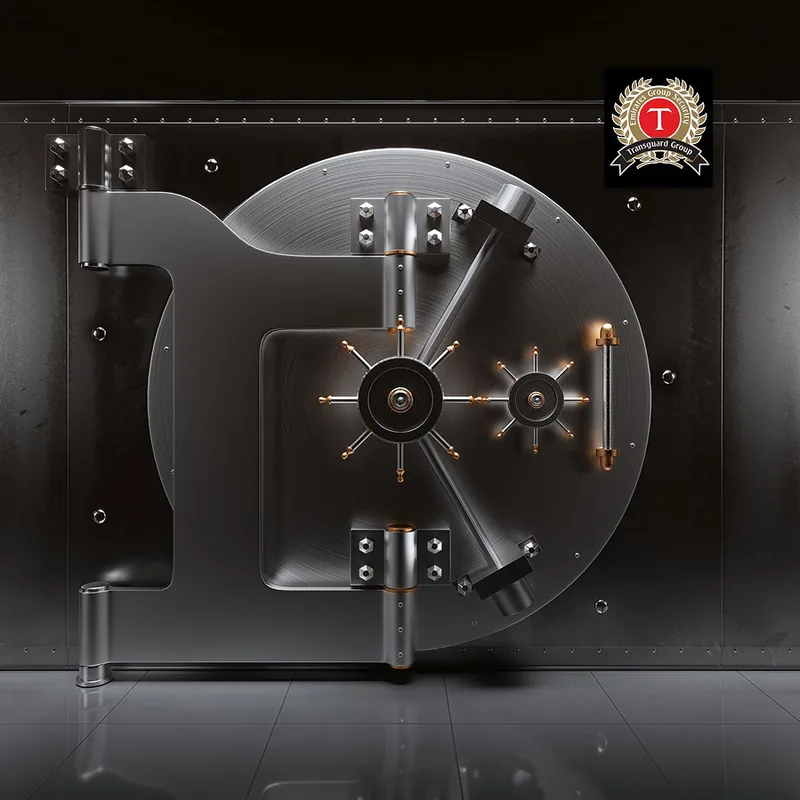
Custody is structure, not assurance.
Insured up to $15M, monitored 24/7, and documented from the moment it arrives.Access is whoever has the combination, the key, or simply lives in the house — including anyone who has ever watched you open it. There is no independent record of who opened the safe, or when.
Access is restricted to you (and anyone you've authorised) during the bank's opening hours, using your key alongside the bank's own. The bank generally can't open the box unilaterally, but it also doesn't monitor what's inside or track handling once you're in the room.
Once the watch is handed over, access is entirely at the discretion of whoever is holding it. Who else in that business can reach it, and under what conditions, is rarely disclosed — you're relying on trust in an individual or a shop, not on a documented process.
Your watch is packed in tamper-proof packaging in your own presence, then enters Transguard's custody chain — a facility that already holds billions of dollars in cash and valuables for UAE banks, bullion investors, and jewellers. Access from that point is controlled, logged, strictly monitored and restricted to authorised custody personnel.
Coverage, if any, comes from your home contents policy — and most home policies cap the amount payable for a single valuable item well below what a luxury watch is worth, unless it's separately scheduled and declared.
Banks in the UAE do not cover the contents of your deposit box — best to ask your bank directly. Many banks explicitly disclaim liability for what's inside, and coverage, if it exists at all, is usually something you have to arrange yourself.
Whether the watch is insured while it sits with a dealer or pawnbroker, on what terms, and up to what value, typically isn't disclosed upfront. And even where a policy exists, most site and contents insurance used by dealers and pawnbrokers covers theft by breaking and entering only — not internal theft by the store's own employees. Coverage varies by provider, and the burden is on you to ask — and to get the answer in writing.
Every watch in custody is insured for its full value, up to a limit of $15 million, based on protocols by Lloyd's of London, from the moment it enters custody — including transport, not just vault storage. This isn't something you have to arrange separately or opt-in for - it's standard with every item in custody.
A safe resists casual tampering, but a determined intrusion with time and the right tools is a real limitation of any home installation — and a home safe is not monitored in real time by anyone.
Bank vaults are genuinely well-built, but access is bound by branch opening hours, and day-to-day monitoring of the vault's contents — as opposed to the building itself — isn't typically part of what the bank offers.
Storage conditions — whether the watch sits in a display case, a back-office drawer, or an actual vault — are rarely disclosed, and there's usually no way to verify them independently.
Watches collected and delivered via armoured carriers and held under 24/7 monitored vault storage with armed guards in ultra-secured sites built for banks, bullion, and jewellery — not adapted from a general-purpose building.
If something happens, there's no independent record — no log of access, no third party who can attest to the watch's condition on any given day. It's your word, and whatever you can reconstruct after the fact.
The bank can confirm you accessed the box on a given date, but it has no visibility into — and keeps no record of — the watch's condition, or anything else inside.
Documentation, if it exists, is whatever paperwork the dealer or pawnbroker chooses to issue. There's typically no independent, third-party record of the watch's condition at handover or throughout the holding period.
Every watch entering custody goes through camera-controlled authentication and is sealed in tamper-proof packaging in your presence — creating a documented condition record at the point of intake, not just a verbal assurance.
| Home Safe | Bank Safety Deposit Box | Informal Dealer / Pawnbroker Storage | Capital Custodia + Transguard | |
|---|---|---|---|---|
| Chain of custody | Anyone with the combination or key; no independent access log | You and authorised users, during banking hours; bank doesn't track in-room handling | Entirely at the discretion of whoever holds it; access terms undisclosed | Packed in your presence; controlled, logged access within Transguard's custody chain |
| Insurance | Depends on home contents policy; single-item caps common unless separately declared | Ask your bank directly — coverage is rarely automatic and often disclaimed for box contents | Varies by provider; terms typically undisclosed unless you ask; usually covers break-in only, not internal theft | Insured for its full value, up to a limit of $15 million, based on Lloyd's of London protocols, from the moment it is collected for transport and enters into custody |
| Physical security & monitoring | Resists casual tampering; not monitored in real time | Strong vault construction; access limited to opening hours, contents not monitored day-to-day | Storage conditions rarely disclosed or verifiable | Armoured transport for collection and delivery. 24/7 monitored vault storage with armed security |
| Documentation & accountability | No independent record; your word after the fact | Bank confirms access dates only; no record of the item itself | Whatever paperwork the holder chooses to issue | Camera-controlled authentication and tamper-proof packaging create a documented record at intake |
Trust in a custody arrangement shouldn't rest on assurance alone. It should rest on infrastructure and documented standard operating procedures: who has access, who insures the item, who's watching, and whether there's a record if a question ever arises. A home safe and a bank box aren't wrong choices for many things — they're simply not built to answer these questions for a single valuable, individually significant object the way a dedicated custody arrangement is.
Trust is an infrastructure, not an opinion.
The trusted custodian of banks, bullion investors, and jewellers, holding billions of dollars in cash and valuables across its ultra-secured UAE sites.
Fully insured. Camera-controlled authentication. Tamper-proof packaging. 24/7 monitored vault storage.
Alongside camera-controlled vault surveillance, day and night.
Each watch is insured for its full value, up to a limit of $15 million, based on protocols by Lloyd's of London.
Headquartered at Level 48, Almas Tower, as part of the DMCC Luxury Innovation Center.
Private consultations. No public exposure. Fully encrypted communication.
A good home safe is a sensible precaution, and plenty of owners use one without issue. But a safe only answers the "where" question — it doesn't insure the watch, monitor it in real time, or produce any record if something happens while it's inside. Custody, by contrast, is built to answer all of those. If your watch is a significant, individually valuable asset, it's worth knowing exactly what a safe does and doesn't cover before relying on it as your only safeguard.
A bank vault is genuinely well-constructed, and many owners assume that strength extends to full coverage of whatever's inside. It often doesn't. Ask your bank directly whether your box's contents are insured — many banks in the UAE explicitly disclaim liability for what's stored inside, leaving coverage as something you'd need to arrange separately. Custody with Transguard is different: insurance is built into the arrangement from the moment they collect the watch, which includes transport and vault storage, not something you have to set up separately.
It's a fair instinct to want to keep a watch nearby with someone in the trade rather than a stranger. The difference is disclosure: with an informal handover, storage conditions, insurance terms, and access are usually not documented anywhere. With Capital Custodia, the watch is packed in your presence, insured for its full value, up to a limit of $15 million, based on protocols by Lloyd's of London, and held under 24/7 monitored, armed-security vault storage from that point forward — none of it left to trust alone.
It goes through camera-controlled authentication and is sealed in tamper-proof packaging in your presence. It then enters Transguard's custody chain — the same custodian trusted by UAE banks, bullion investors, and jewellers — under 24/7 monitored vault storage with armed security. You're never asked to simply take our word for where it is or how it's held.
Yes — that's the point of documentation over trust. The watch is insured for its full value up to a limit of $15 million. The camera-controlled authentication and tamper-proof packaging at intake create a record of the watch's condition and value from the outset, held by a custodian independent of the transaction itself. You are never left relying purely on a verbal assurance. You are never obligated to proceed with anything unless you are fully confident in how your watch will be held.
If you're weighing where a valuable watch should sit — whether you're considering a sale, a Re-purchase Agreement, or simply want to understand your options for safekeeping — a private consultation costs nothing and commits you to nothing.
100% Secured & Confidential. All consultations are private and by appointment only.